Affinity — what does it mean?
This spell costs 1 generic mana less to cast for each permanent of the stated type you control (usually artifacts).
Affinity appears on 75 cards.
How does Affinity work?
Affinity is a static ability written as affinity for something, most often affinity for artifacts. It means the spell costs {1} less to cast for each of those things you control. It only works while you're casting the spell, so it does nothing once the card is on the battlefield. It counts permanents you control, not cards you own elsewhere: artifact lands, artifact creatures and artifact tokens all count, cards in your graveyard and your opponents' artifacts don't.
The reduction only applies to generic mana, the number in the cost. Colored mana always has to be paid. A spell that costs {4}{U} with four or more artifacts costs only {U}, and more artifacts won't get it lower. The cost is worked out once, while you cast the spell, and then it's locked in. Then you activate mana abilities and pay. That means you can count an artifact for affinity and then sacrifice it for mana to pay the rest, and an opponent can't make your spell more expensive by destroying artifacts in response, because by then it's already cast.
Affinity doesn't change the card's mana value. A spell that costs {4}{U} has mana value 5, no matter how little you paid. That matters for effects that check mana value, such as cascade or counterspells that look at it. If a spell has multiple instances of affinity, each one applies, and affinity combines with other cost reductions.
An example at the table
You want to cast a spell that costs {4}{U} and has affinity for artifacts. You control two artifact lands, an artifact creature and an artifact token that you can sacrifice for one mana of any color. That's four artifacts, so the cost becomes {U}. The cost is locked in, and then you sacrifice the token for blue mana to pay that {U}. You've cast a spell with mana value 5 without tapping a single land. If you'd only had two artifacts, it would have cost {2}{U}.
Cards with Affinity
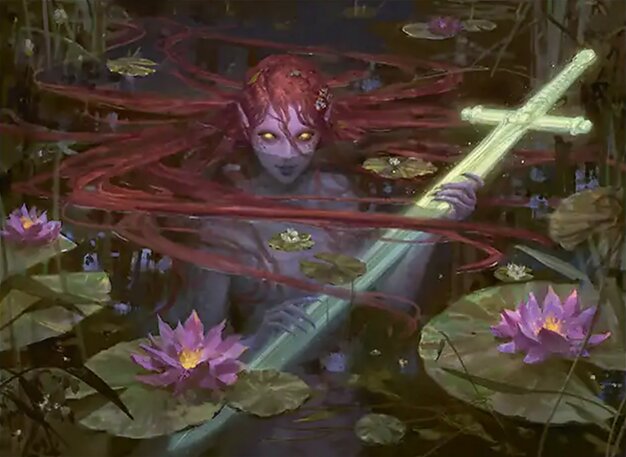 Emry, Lurker of the LochIllustration: Livia Prima
 Thought MonitorIllustration: Martina Pilcerova
 ThoughtcastIllustration: Greg Hildebrandt
 Junk WinderIllustration: Campbell White
 Mycosynth GolemIllustration: Paolo Parente
Common mistakes
- Thinking affinity reduces colored mana. It only reduces the generic part of the cost.
- Thinking it lowers the mana value. The mana value stays the same as printed, whatever you paid.
- Counting your opponent's artifacts or cards in your graveyard. Only permanents you control count.
- Thinking sacrificing an artifact for mana raises the cost. The cost is locked in before you pay.
Frequently asked questions
- Can affinity make a spell completely free?
- Only if its cost is entirely generic mana. Colored mana in the cost always has to be paid.
- Do lands count for affinity for artifacts?
- Only lands that are also artifacts. Regular lands don't count.
- Do artifact tokens count?
- Yes. A token is a permanent, so an artifact token you control counts like any other artifact.
- Can my opponent make my spell more expensive in response?
- No. The cost is locked in while you cast the spell. Destroying your artifacts afterward doesn't change what you paid.
Official rule: Comprehensive Rules 702.41. More on where this rulebook comes from under Sources.
Often seen with
FlyingTrampleVigilanceHasteMill
Which cards with Affinity do you own? →
Last updated: 26 October 2026